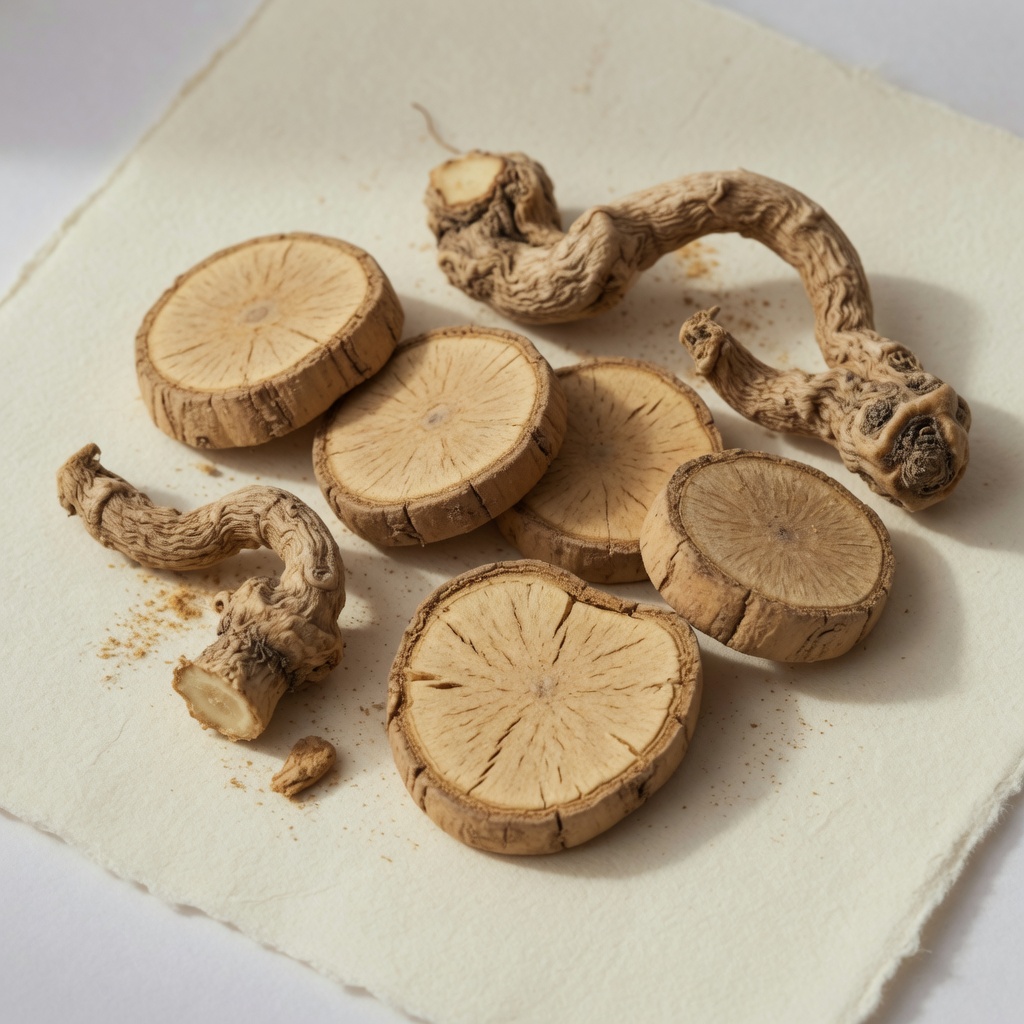
In Qifu it is one hundred milligrams of Lepidium meyenii, the Andean crop kept for energy. The trade likes to call it Peruvian ginseng. The highland farmers called it food.
What the chronicles actually say
Cieza de León saw it in 1553, a root the people of Bombón lived on. Father Cobo named it maca in 1653 and said it grew in the harshest, coldest part of Chinchaycocha, where no other plant for a man's sustenance would take. Archaeology puts fragments in a cave at Panalauca thousands of years back. Until the late 1980s it was still a small crop around that lake, almost forgotten outside the puna. Then the catalogues found it.
The warrior stories are later advertising. What the record supports is simpler: a staple of a high, thin place; a tax paid in dried roots; a thing you traded down the mountain for maize. The Spaniards noticed their horses at altitude. Fertility at four thousand metres is a local problem. The plant was asked to help with that, in people and in livestock. Food first. Reputation second.
A crop, not a miracle of the 1990s
Walpers gave it a Latin name in 1843, from a wild specimen collected far from the fields that actually grew it. For most of the twentieth century maca stayed in Junín. The internet made it global. We keep the older sentence: an Andean brassica, eaten, dried, and relied on because the plateau offered so little else.
Brassicaceae, with mustard and cabbage. The only brassica domesticated in the Andes. Macamides are the compounds the papers name. We keep the hypocotyl because it earned a place at the table before it earned a place on a label.
Why it sits in Qifu
The daily vitality, with ginseng, tribulus, ginger and ashwagandha. One hundred milligrams. Not a shortcut for the hour. An old crop, used honestly, in the formula that accumulates over weeks.
This journal will keep one plate at a time. History first. The formula second. Claims last, and only the ones we can stand behind.
End of plate VI.