
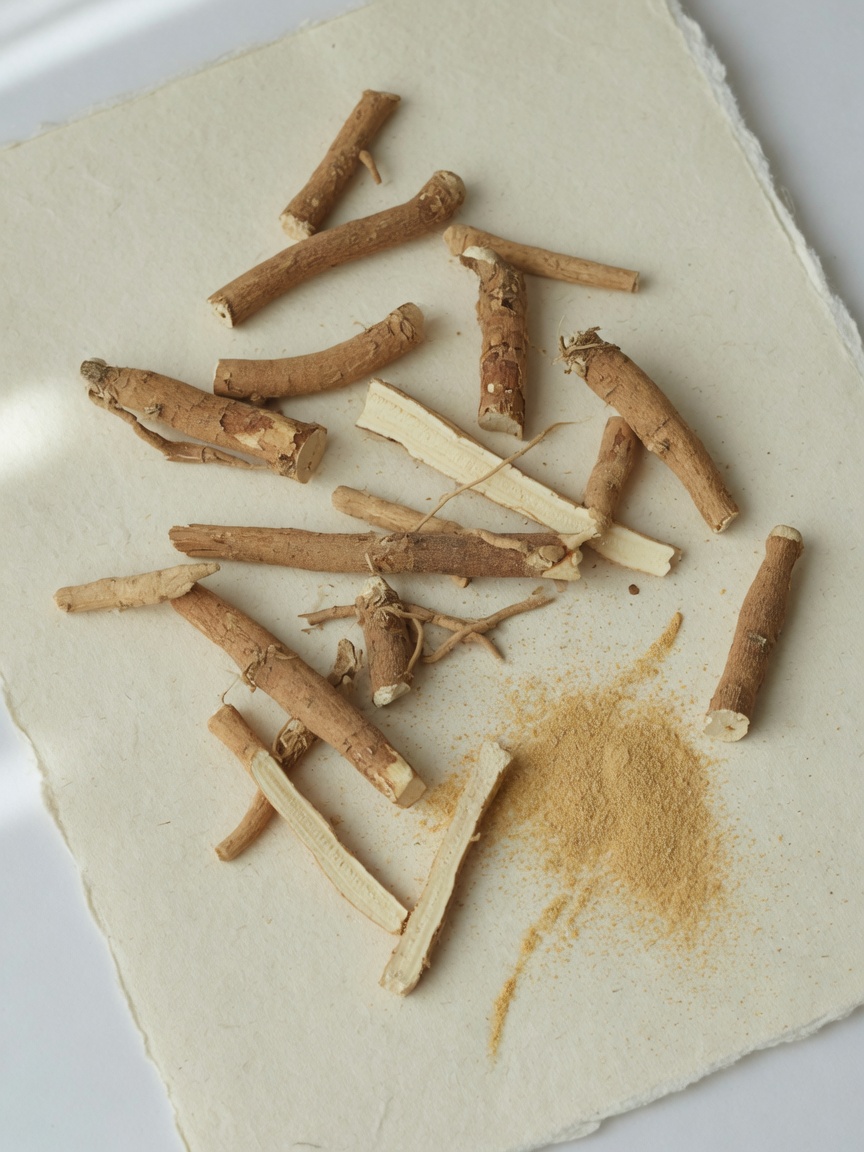
In the line it is the through-plant. Fifty milligrams in Qifu. The stress layer in Weifu. The vitality layer in Changfu. Withania somnifera: winter cherry to the English, Indian ginseng to the trade, ashwagandha to the books that had it first.
A rasayana, then a Latin
The Charaka Samhita and the Sushruta Samhita place it among the rasayana, the plants kept for replenishment and for lasting. Somnifera is later Latin: sleep-bearing. The older job is balya, strength-promoting. Root, powdered, taken with milk. A shrub of dry ground: India, and the arid belts that share its weather.
It is not in the Vedas by this name. It is in the classical medical books, which is the record that matters. Synonyms keep returning to the horse: hayagandha, vajigandha, turangagandha. Smell, or stamina. The commentarial tradition never quite chose.
What the West named it
An adaptogen. A twentieth-century word laid over a much older practice. We do not need the word to keep the plant. What the sachets ask of it is modest: a daily root, not a personality.
Solanaceae, with tomato and nightshade. The chemistry that laboratories name is withanolides. Charaka did not have that sentence. He had the root.
Why it runs through three formulas
The week and the decade, not the hour. Jingfu does not need it. The daily line does: Qifu for continuity, Weifu for men under training load, Changfu as SHBG rises. Same plant, different brief. That is the point of a through-root.
This journal will keep one plate at a time. History first. The formula second. Claims last, and only the ones we can stand behind.
End of plate IV.