
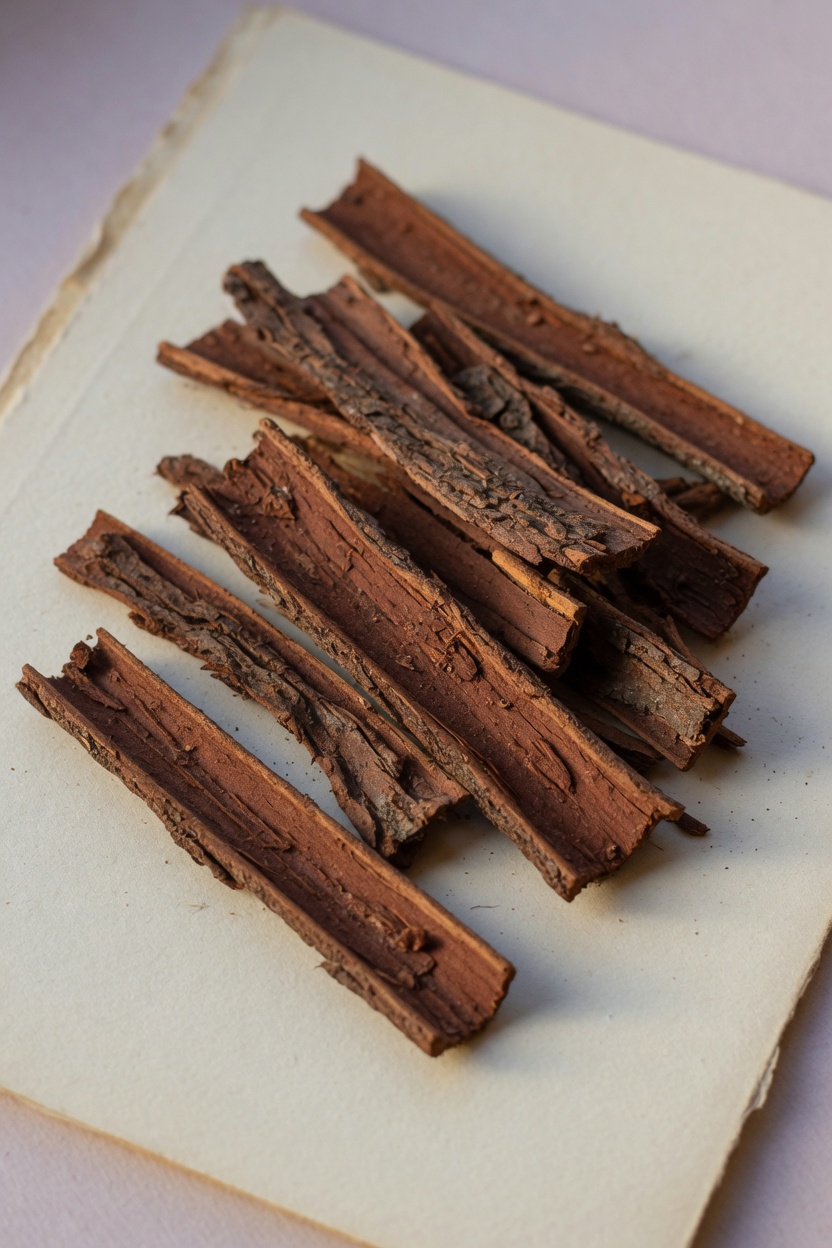
In the formulas it is listed as Erythroxylum catuaba, three hundred milligrams, the last active in Jingfu and the one that replaced yohimbine. In the forest it is older than any of those names.
Catuaba is not, strictly, a plant. It is a word.
A Tupi name, then a Latin one
The Tupi and Guarani languages of the Brazilian coast gave it to the infusion of a bark: a tonic taken before the hunt, before a long walk, before the part of the day that asked more of a man than he had slept. Later Portuguese botanists tried to pin the word to a specimen. In 1904 Arthur José da Silva published a description of Erythroxylum catuaba. The species is not recognised now. What he held in his hand was almost certainly something else: Erythroxylum vaccinifolium, or Trichilia catigua, or one of a handful of trees that village markets still sell under the same name.
The word outlived the taxonomy. That is the interesting part.
What the bark was asked to do
In Maranhão they used to say the trees stood half-naked in the forest, stripped of bark as high as a tired man could reach. In Minas Gerais a saying still travels: if a father has a child before sixty, the child is his; after that, the child is the catuaba's. Folk speech, not a trial. The point is how long the bark has been asked to stand in for vitality, memory, and the private confidence of men who did not have a clinic to walk into.
It belongs to Erythroxylaceae, the same family as coca. It does not contain cocaine. The chemistry that has been studied, mostly in Trichilia catigua, is a quieter set of alkaloids, tannins, flavonoids. Laboratory papers speak of rats. Traditional use speaks of tea. We do not treat those as the same sentence.
Why it sits in Jingfu
Jingfu takes the bark for the hour, not the year. Muira puama, damiana, Siberian ginseng, arginine, and then this: the Brazilian lead, three hundred milligrams, already in production as Blend 2. Yohimbine was the older Western shortcut. Catuaba is the swap we preferred. A plant with a people and a language behind it, not a stimulant looking for a label.
This journal will keep one plate at a time. History first. The formula second. Claims last, and only the ones we can stand behind.
End of plate I.